Frontier City
- 4.4
- Rating
- 10.00K
- Installs
- Free
- Price

 Analysis by App-foxy
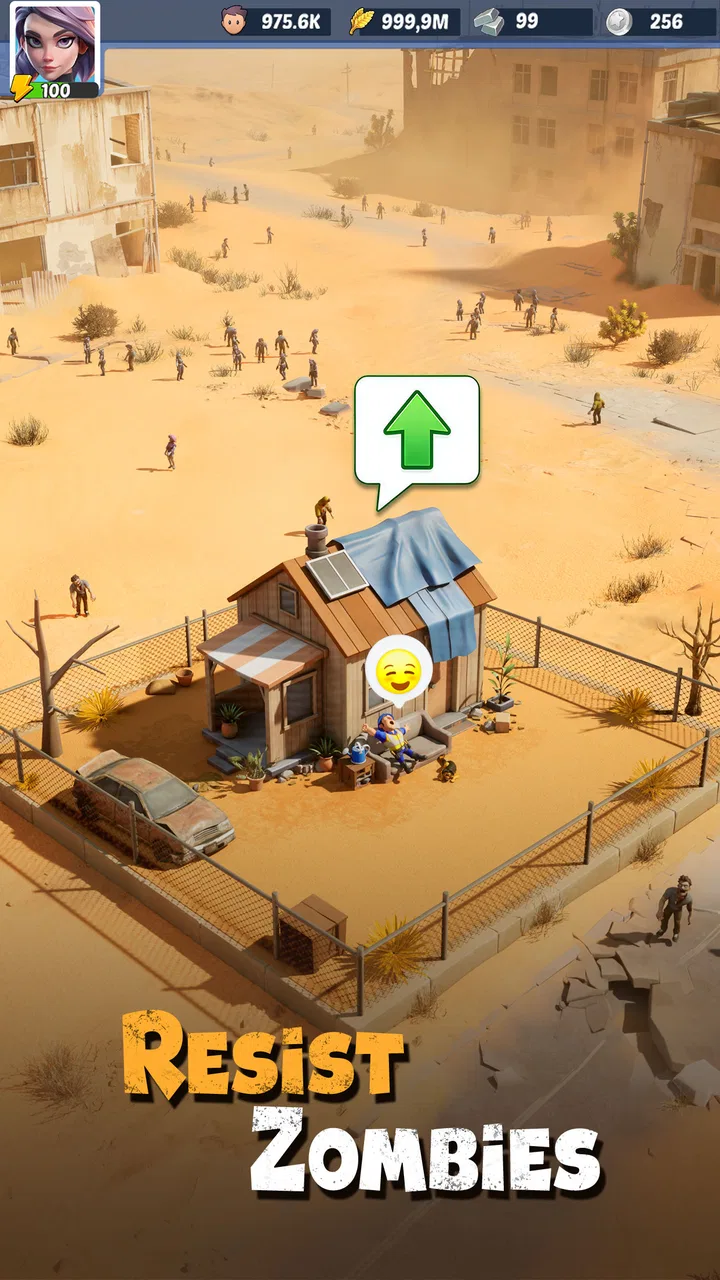
Frontier City is the kind of strategy game I can imagine opening for a few minutes, checking the state of a settlement, making one important decision, and then putting my phone down. Its central idea is appealing: build and manage a city while a zombie threat turns every expansion choice into a question of survival. That combination gives the game a more focused identity than a standard city builder, but it also means the experience depends heavily on how much pressure and repetition you enjoy.
I approached it as a mobile strategy game rather than as a purely decorative construction title. The interesting part is not simply placing buildings until the map looks busy. The setting encourages me to think about space, preparation, and the cost of growing too quickly. A larger settlement should feel more capable, but it also creates more to protect and more decisions to juggle. That tension is the reason I would recommend trying it, especially if you like management games with a hostile world pressing against your plans.
My main takeaway is that Frontier City works best when I treat it as a survival-minded city builder, not as a relaxed decoration app. It is free to start, made by CamelStudio, and listed for Teen players. The current version is 0.7.554, and it runs on devices using Android 8.0 or later. Those details make it accessible to a wide range of Android users, although the relatively small community reflected by its store reception suggests that newcomers should approach it with realistic expectations rather than assuming they are joining a huge, established strategy scene.
You May Also Like

 AccuWeather: Weather Radar
AccuWeather Review: A Quick, Clear Forecast for Everyday Decisions
For everyday plans, the best forecast is the one you can understand quickly. AccuWeather makes rain timing, radar, and local conditions easy to act on, with a few trade-offs.

 Hill Climb Racing
Why Hill Climb Racing Still Turns Crashes Into One More Run
A tiny car, a bumpy hill and one more upgrade: Hill Climb Racing keeps resurfacing because its simple chaos makes every near-miss feel personal.

 AliExpress - Shopping App
AliExpress Makes Global Shopping Feel Personal, but Shoppers Bear the Risk
AliExpress turns a global marketplace into a pocket-sized discovery engine. Its reach is useful, its shopping loop compelling, and its trade-offs easy to miss.

 Lords Mobile: Kingdom Wars
Lords Mobile Is a Kingdom-Building Routine, Not a Quick Match
A case-by-case verdict on the building, battles, device demands, and social commitments that make Lords Mobile rewarding for some players and exhausting for others.

 PDF Scanner app - TapScanner
TapScanner Makes Paperwork Easier to Capture, Check, and Share
TapScanner makes scanning with a phone feel less like a rescue operation and more like a dependable step in getting work done. Its capture tools are useful, though not flawless.

 Block Blast!
 Shows How Much a Puzzle Game Can Leave Out
A quiet grid game shows why puzzle players increasingly value instant clarity, repeatable skill and low-pressure play—and where the genre still needs to catch up.
More From Our News Desk
View All News


Building a settlement when every choice carries a cost
The strongest part of the concept is the way it combines two familiar genres without making either one completely disappear. A normal city builder asks me to balance growth, resources, and layout. A zombie strategy game asks me to prepare for danger and protect what I have created. Frontier City places those ideas in the same loop. When I think about adding something to the settlement, I am not only considering whether it improves production or convenience; I am also considering whether I can support the wider city when trouble arrives.
That framing gives ordinary construction decisions more weight. In a peaceful builder, expanding toward an empty area can feel like an obvious improvement. Here, expansion can become a commitment. It may increase the territory I need to manage, stretch the city’s defenses, or make recovery from a bad decision more difficult. Even without relying on complicated rules, that basic pressure makes the setting matter. The zombies are not just background decoration; they are the reason the city needs a plan.
I also like that the game’s premise leaves room for different personal approaches. One player may prefer a compact settlement that is easier to oversee. Another may push outward quickly, accepting more risk in exchange for faster growth. A cautious player can focus on making the existing city dependable before reaching farther into the frontier. That flexibility is valuable on a phone, where I may want a short, deliberate session rather than a long campaign that demands constant attention.
The practical rhythm of a good session
My preferred way to play a game like this would be to begin by checking the city’s immediate needs instead of expanding automatically. I would look at what is already functioning, identify the next bottleneck, and decide whether the safest improvement is internal or outward-facing. That habit matters because a city can appear larger while becoming less manageable. Frontier City’s premise rewards me for asking what the settlement can actually sustain before I chase the next visible upgrade.
A useful everyday scenario would be a commute or lunch break. I might open the game with only a short window available, inspect the settlement, and make one meaningful adjustment rather than starting a long battle or complicated chain of tasks. If the current situation is stable, I can prepare the city for its next challenge. If it is already strained, I can prioritize recovery and organization. This makes the game a better fit for players who enjoy small strategic decisions throughout the day than for people seeking uninterrupted action.
Another practical approach is to separate growth decisions from emergency decisions. If I spend every session reacting to the latest problem, I may never create a stable foundation. If I expand constantly without checking the city’s ability to cope, I may turn progress into a recurring crisis. I found the concept more satisfying when I treated each session as a short planning meeting: first stabilize, then improve, and only afterward consider a larger ambition.
Three details that change how I would play
The first non-obvious lesson is that city shape matters as much as city size. A sprawling settlement can look impressive, but it may be harder to read and harder to protect than a compact one. I would resist the urge to fill every available space immediately. Leaving room for future adjustments is not wasted territory; it is a way to avoid locking myself into an awkward arrangement that becomes expensive or frustrating to correct later.
The second is that I would keep a deliberate distinction between progress and preparedness. A new construction can feel rewarding because it visibly advances the city, yet the best next move may be something less glamorous that improves the settlement’s ability to withstand pressure. This is a useful trade-off for anyone who tends to choose the most obvious upgrade. In Frontier City, the most exciting option is not automatically the most responsible one.
The third is that short sessions should have a purpose. Rather than opening the game and tapping through whatever is available, I would decide on a small objective before starting: improve the city’s balance, prepare for danger, or create room for a future expansion. That approach reduces aimless play and helps reveal whether the game’s strategic loop is genuinely enjoyable. If I cannot find a satisfying small objective after several sessions, the issue is probably not my planning but the game’s fit for my tastes.
Where the experience is convincing—and where it asks for patience
Frontier City’s clearest strength is its theme-to-mechanics connection. The zombie setting gives purpose to the city-building structure, while the city gives the survival premise a sense of long-term consequence. I am not simply trying to endure one isolated attack; I am trying to develop a place that can continue functioning under pressure. That makes the game more interesting than a builder that only rewards visual growth.
The other strength is its accessibility. Because it is free to download, I can test the central loop without committing money at the beginning. That matters for a niche strategy game, especially one with a modest store footprint. The listing shows a 3.6 average from 48 ratings and 10 written reviews, with 10K+ installs. I read that as a sign that the game has attracted a real but still limited audience, not as proof that it will suit every strategy fan.
The Teen content rating also sets a sensible expectation for the theme. The game is built around zombies and survival pressure, so it is not aimed at very young children looking for a completely gentle city toy. Parents should consider whether that tone fits the player, while older players who enjoy post-apocalyptic settings should understand that the appeal comes from the conflict between settlement management and danger rather than from a purely peaceful construction experience.
At the same time, the game’s current version suggests an experience that may still feel like it is finding its shape. Version 0.7.554 is not a reason to dismiss it, but it does make me more cautious about expecting the polish, breadth, or long-term refinement of the biggest strategy games on mobile. I would install it with curiosity and judge the actual loop for myself, rather than assuming that a promising premise automatically means a fully mature game.
The friction I would want players to understand
The biggest limitation is the possibility of repetition. City-building games can settle into a cycle of checking the same needs, making incremental improvements, and waiting for the next meaningful decision. The zombie theme adds urgency, but it cannot by itself guarantee that every session feels fresh. Players who need constant variety, fast combat, or a strong narrative may find the management rhythm too restrained.
There is also a natural tension between free access and monetization. Frontier City is free, but its in-app purchases range from $0.99 to $99.99 per item. That is a wide span, and it is important for me to treat the game as a trial before spending. I would first learn whether the basic progression feels satisfying without purchases, then decide whether any optional spending genuinely improves my experience. Anyone uncomfortable with broad in-app purchase ranges should be especially disciplined and set a personal limit before playing.
Another source of friction is the learning curve created by the premise. A casual player may expect a simple build-and-expand game, then discover that growth has consequences. That is not necessarily a flaw, but the game may feel less welcoming if its priorities are not immediately clear. My advice would be to avoid rushing through early decisions. Take time to understand what the settlement needs, and do not measure success only by how quickly the city becomes larger.
Compared with a traditional city builder, Frontier City is the better choice when I want danger to influence planning. A conventional builder is preferable when I want relaxed creativity, visual organization, or a calm sandbox without survival pressure. Compared with a direct zombie action game, Frontier City is better for someone who wants to oversee a community rather than control every moment of combat. An action-focused alternative will likely feel more immediate; this game’s appeal is the slower responsibility of keeping a frontier settlement viable.
Who should install it, and who should skip it
I would recommend Frontier City to players who enjoy making trade-offs, watching a settlement develop, and thinking one or two steps ahead. It is particularly suitable for someone who likes the idea of a city builder but wants a hostile setting to give construction decisions consequences. If you enjoy checking a game in short bursts and returning to a developing plan, the format may fit naturally into your routine.
I would also suggest it to players who are patient with a developing mobile title. The combination of a 3.6 average and a relatively small number of ratings tells me that this is not a universally established favorite. That does not make it unworthy of attention; it simply means I would approach it as a game with room to prove itself. The free entry point makes that experiment easier, provided I keep spending optional and controlled.
I would skip it if my ideal strategy game is primarily about fast battles, deep competitive systems, or a huge amount of content from the first launch. I would also look elsewhere if I want a completely peaceful builder with no grim survival atmosphere. The zombie premise is central, not an interchangeable skin. Likewise, players who dislike waiting, repeated management checks, or making cautious progress may find the frontier theme less exciting than the store summary suggests.
For new players, my strongest recommendation is to establish a personal rule before the first session: do not buy an item simply because progress feels slow. Play long enough to understand the city’s regular rhythm, identify which decisions you actually enjoy, and decide whether the challenge comes from strategy or from friction. That small pause can prevent an impulsive purchase and gives the free version a fair test.
My verdict after weighing the promise against the rough edges
Frontier City has a clear and worthwhile idea at its center. Building a city amid zombies is more compelling than either theme would be alone because each side changes how I view the other. Expansion is not just decoration, and survival is not just a sequence of isolated threats. The most enjoyable moments should come from creating a settlement that feels prepared without becoming so cautious that it stops moving forward.
I would not call it a universal recommendation. Its current 0.7.554 version, modest reception, and broad in-app purchase range make me recommend a measured approach. Download it because the strategy concept interests you, not because you expect the scale or polish of a major mobile franchise. Give the free experience enough time to show whether its planning loop holds your attention, and keep purchases firmly secondary.
For me, the final decision is straightforward: Frontier City is worth trying for thoughtful mobile strategists who want city management shaped by zombie survival. It is less suitable for players seeking relaxed decoration, nonstop action, or a fully proven long-term ecosystem. If you enjoy compact sessions, careful expansion, and the satisfying discomfort of choosing between growth and security, CamelStudio’s game has a distinctive foundation. If that trade-off sounds tiring rather than exciting, a calmer city builder or a more action-driven zombie game will probably serve you better.
That is ultimately why I find the game interesting despite its limitations. It gives me a specific question to answer every time I play: how much can this frontier city grow before growth itself becomes the danger? When a strategy game can make that question feel personal, it has earned a place on my shortlist, even if I still expect rough edges and a gradual path toward its full potential.
FAQs for Frontier City
01What is Frontier City and what can I expect from the game?
Frontier City is an immersive strategy game where players build and manage their own wild west town. Expect to engage in resource management, town expansion, and defense against bandits. The game combines elements of construction, strategy, and adventure, offering hours of engaging gameplay with a dynamic storyline.
02Is Frontier City free to play, and does it have in-app purchases?
Frontier City is free to download and play, but it includes optional in-app purchases. These purchases can enhance gameplay by speeding up construction times or unlocking exclusive items. Players can enjoy the game fully without spending money, although purchasing may provide a more seamless experience.
03What are the system requirements for Frontier City on Android and iOS?
For Android users, Frontier City requires Android 5.0 or later, while iOS users need iOS 11.0 or later. It’s optimized for both smartphones and tablets, ensuring good performance across devices. Ensure sufficient storage space is available for smooth installation and updates.
04Does Frontier City require an internet connection to play?
Frontier City primarily requires an internet connection to access all features, including multiplayer interactions and event updates. However, some basic gameplay elements may be accessible offline, though progress might not be saved until reconnected. Regular internet access is recommended for the best experience.
05How does Frontier City handle player data and privacy?
Frontier City adheres to strict privacy guidelines, ensuring that player data is encrypted and securely stored. The game collects minimal personal information necessary for gameplay enhancement and community interaction. Always review the privacy policy and terms of service before playing to understand how your data is managed.
Pros
- Engaging open-world exploration.
- Diverse character customization options.
- Smooth and intuitive controls.
- Rich storyline with multiple quests.
- Frequent updates with new content.
Cons
- Occasional in-app purchase prompts.
- Requires significant device storage.
- Some bugs in multiplayer mode.
- Graphics may drain battery quickly.
- Limited offline functionality.

Frontier City
Gallery